
Play Flip or Fail Online Free
Casual Games
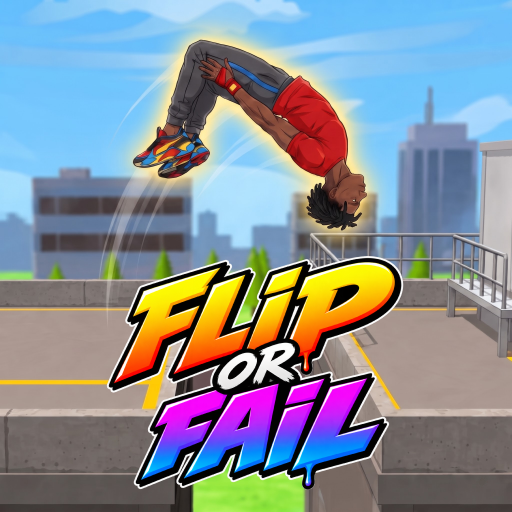
Flip or Fail






| Rating | 4.3 / 5 (31,000 votes) |
| Played | 310,000 times |
| Developer | AZ Games |
| Released | 2025-07-01 |
| Platform | Desktop, Mobile, Tablet |
| Technology | HTML5 (WebGL) |
| Category | Casual Games |
The title Flip or Fail is not branding — it's a technical description of the game's grading system. You will flip. You will fail. And if you keep at it, you'll start failing in progressively more instructive ways until, suddenly, you're landing things.
Everything covered here:
- What is Flip or Fail?
- How to Play Flip or Fail Unblocked
- Flip or Fail Controls
- How the Landing Is Graded
- Flip or Fail Tips
- Games Like Flip or Fail
- Flip or Fail FAQ
What is Flip or Fail?
Flip or Fail is a physics-based flipping game where you launch a ragdoll gymnast through the air and then fight gravity for a landing worth points. Every level is the same honest triangle: a launch pad, a gap, and a target platform. Connecting the three — with style — is the entire sport.
The ragdoll animation does a lot of quiet design work here. Because your gymnast is physically simulated rather than scripted, every landing is legible: you can see why the crash happened. Too much rotation and you watch yourself over-rotate onto your back. Not enough and you land short, folding at the knees like a deck chair. The near-misses are the best part — the landings where you almost stick it, teeter, and then slowly, tragically, tip over the edge. Failing this clearly and this entertainingly turns frustration into curiosity, which is the engine of every good die-and-retry game.
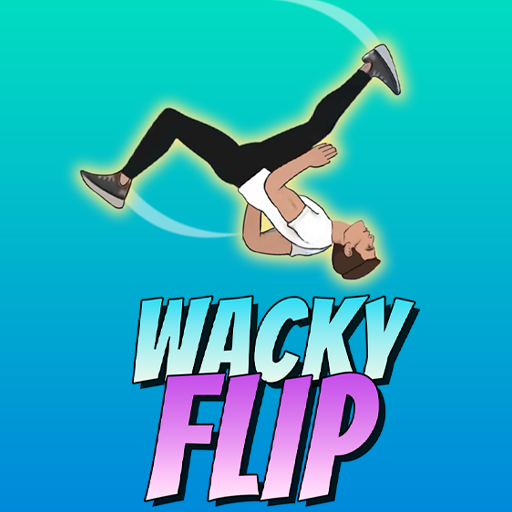
Compared to its rowdier cousin Wacky Flip, Flip or Fail plays it straighter. This is the gymnastics-focused entry in the family: the targets are smaller, the landing grades are stricter, and the game asks for precision where Wacky Flip asks for flair. Think of them as the same skill viewed through two lenses — one's the highlight reel, the other's the training montage.
How to Play Flip or Fail Unblocked
Every attempt runs a three-act structure, and each act has its own failure modes worth understanding.
The launch. Hold to charge power, aim, release to fly. The charge is a real decision, not a reflex: too little and you drop into the gap, too much and you overshoot the target — Flip or Fail happily lets you fly past a perfect landing into whatever waits beyond it. Before charging, look at where you need to arrive and work backward. Power serves the landing, never the other way around.
The flight. Tapping in mid-air adds rotation in fixed chunks. This is the part that feels chaotic at first and becomes oddly mathematical with practice: your total spin is a tap count, your air time is set by your launch, and the whole trick of the game is choosing a tap count that finishes rotating before your air time does.
The landing. The moment of truth, graded by the game's scoring system (fully dissected in the next section). The short version: stop tapping while there's still sky above you, arrive over the platform, and let the final stretch of the fall align your ragdoll feet-down. Then watch — with either satisfaction or horror — as physics delivers its verdict.
Progression follows the classic curve with one twist: as the levels advance, targets shrink and the game starts demanding specific trick types on specific landings, which pushes you from "survive the flip" to "perform the flip, on demand, on this exact spot." The skills stack — a player who can consistently stick a double flip has, along the way, accidentally become excellent at singles. In that sense Flip or Fail is less a collection of levels and more a curriculum wearing a ragdoll costume.
Flip or Fail Controls
| Action | Desktop | Mobile |
|---|---|---|
| Charge jump | Hold mouse / space | Hold screen |
| Launch | Release | Release |
| Add rotation | Tap / click mid-air | Tap mid-air |
| Straighten out | Stop tapping before landing | Stop tapping |
The same elegant one-finger scheme as the rest of the family — and the same hidden depth, because "when to tap" and "when to stop" turn out to be the entire game.
How the Landing Is Graded
Flip or Fail's scoring deserves a proper explanation, because understanding it changes how you play. There are, in practice, four possible verdicts when your gymnast meets the ground:
The stick (perfect). Feet-first, rotation fully killed, centered on the target. Maximum points, combo preserved, and your gymnast has a moment of genuine athletic dignity. This is the only outcome the scoreboard truly respects, and every mechanic in the game exists to make it hard.
The stumble (good). Feet-first but off-balance or off-center — you'll see your gymnast take a step, wobble, or land near the edge. Points are banked, but the combo chain breaks. Stumbles are the game telling you your rotation count was almost right.
The bounce (bad). Any arrival that isn't feet-first but survives — knees, seat, an undignified roll. Minimal points, combo gone, dignity negotiable. The physics engine will cheerfully let you limp through a level this way, which is why the game also grades style: you can finish on bounces, but you can't score well on them.
The fail. Head, neck, or full crash, or missing the platform entirely. No points, instant restart, and a front-row seat to the consequences.
The strategic takeaway from this ladder: combo discipline beats hero flips. A chain of sticks and stumbles on modest tricks compounds through the multiplier and outscores one heroic quadruple followed by three crashes — every time, on every level, without exception. The players at the top of the leaderboard look almost conservative in their trick selection. They've done the math the scoring system is quietly begging everyone to do.
Flip or Fail Tips
1. Decide the trick before you launch
The best flippers pick their tap count while still charging the jump — "this gap, this air time, so: double, four taps." Deciding mid-flight means deciding while spinning, and nobody decides well while spinning.
2. Straighten embarrassingly early
The most common crash at every skill level is the last-second tap: one more rotation attempted in the final third of the fall. Open up early and let gravity finish the alignment. A slightly-under-rotated stick beats a fully-rotated faceplant by exactly as much as the scoreboard says it does.
3. Aim for the center, charge for the gap
Two aiming mistakes dominate: charging for maximum distance (and sailing past the target) and aiming at the platform's near edge (and catching it short). Center of the platform, power matched to the gap — launch like you've read the landing before you've taken off. Which, by tip #1, you have.
4. When a level blocks you, drop down a trick
The classic plateau: a level wants a clean double and you can only stick singles, so you throw doubles until morale collapses. Break the cycle deliberately — go back to sticking perfect singles on that landing for five attempts, then add the extra taps. You're not regressing; you're rebuilding the landing with one more rotation on top of a base you trust.
5. Watch your worst landings once, without retrying
Flip or Fail's physics always shows you the cause: over-rotation, under-charge, late straighten, edge-catch. Ten seconds of honest diagnosis beats ten blind retries. The ragdoll is a very patient teacher if you let it speak.
Games Like Flip or Fail
More ragdolls, landings, and one-more-try energy:
- Wacky Flip — The freer, flashier sibling: bigger chains, more elaborate parkour levels.
- Stickman Hook — Grappling-hook momentum puzzles with the same physics personality.
- Moto X3M — Flips with wheels on, across checkpoints and exploding scenery.
- Curve Rush — The "stick the landing" skill distilled into a single ball.
- Vex 3 — Precision platforming for when you want your failures to be entirely your own fault and nothing's watching.
- Basketball Stars — A different sport, the same appreciation for clean arcs and stick landings.
Flip or Fail FAQ
Is Flip or Fail free to play?
Yes — Flip or Fail is completely free in your browser. No download, no signup, no payments of any kind. The ragdoll works pro bono.
Is Flip or Fail unblocked at school?
Yes. Flip or Fail runs on this site as an unblocked HTML5 game — playable on school networks, Chromebooks, and locked-down machines with nothing to install.
Can I play Flip or Fail on mobile?
Yes — hold and tap controls map perfectly to touchscreens, and the quick retry loop suits short mobile sessions. For more great touch games, see our casual games collection.
How do I land on my feet consistently?
Two habits fix most landings: choose your total rotation (tap count) before launching rather than mid-flight, and stop tapping during the final third of your fall so your gymnast can straighten out. Between those two, "random" crashes become rare almost immediately.
What's the difference between Flip or Fail and Wacky Flip?
They're siblings in the ragdoll-flipping family. Wacky Flip is the parkour-flavored, combo-chaining take with bigger environments; Flip or Fail is the stricter gymnastics version with smaller targets and harsher landing grades. Most players enjoy both — Wacky Flip for flow, Flip or Fail for precision.
Why do I keep over-rotating?
Because the last tap is always tempting and air time is finite. The fix is literal counting: learn how much rotation one tap adds, then set a hard rule that the final third of every fall is tap-free straightening time. Over-rotation isn't a physics problem — it's an impulse-control problem the physics merely exposes.
Does the game get harder?
Yes — targets shrink, gaps widen, and later levels require specific tricks landed on specific spots. The difficulty curve is well-tuned rather than cruel: each new demand tends to be exactly one skill on top of what the previous levels taught you. Which is either thoughtful design or a very polite way of calling you a student.
You May Also Like
Discuss Flip or Fail
0 commentsLoading comments...