
Play Curve Rush Online Free
Casual Games



Curve Rush












| Rating | 4.4 / 5 (42,000 votes) |
| Played | 420,000 times |
| Developer | AZ Games |
| Released | 2025-04-10 |
| Platform | Desktop, Mobile, Tablet |
| Technology | HTML5 (WebGL) |
| Category | Casual Games |
Curve Rush looks like a downhill toy and plays like a physics thesis. The whole game is three verbs — roll, fly, land — and the gap between playing it badly and playing it well is entirely about understanding what momentum is doing when you're not looking.
The syllabus:
- What is Curve Rush?
- How to Play Curve Rush Unblocked
- Curve Rush Controls
- The Landing System, Explained
- Why Flying High Is a Trap
- Curve Rush Tips
- Games Like Curve Rush
- Curve Rush FAQ
What is Curve Rush?
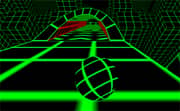
Curve Rush is a skill game about a ball riding an endless landscape of smooth hills. Downhills build your speed. Upslopes launch you into the air. While flying, you earn points for height — and then gravity presents the bill. Land smoothly on a matching downslope and your momentum carries into the next curve, faster than before. Land badly and the run is over on the spot.
It's a beautifully simple risk machine. Every crest presents the same question: how much of your speed do you want to spend on points right now? A modest jump keeps your momentum compounding, hill after hill, building toward the huge scores. A greedy one sends you soaring — the points ticker singing — right up until you meet the ground at an angle it refuses to forgive. Curve Rush is the rare game where the crash is always, visibly, mathematically your own fault, and that's exactly why it's so hard to stop playing.
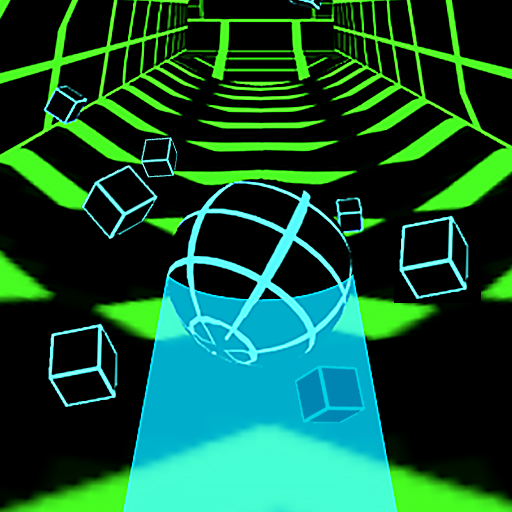
The neon presentation places it in the same family as Slope and Tap Road, but the temperament is different. Those games are about dodging; Curve Rush is about judgment. Nothing comes at you. The track never attacks. There is only physics, patient and impartial, waiting to grade your decisions.
How to Play Curve Rush Unblocked
Your ball rolls along the undulating track automatically. The interaction happens at the crests: as you approach the top of a hill, you can dive or boost to control your launch. Let the hill throw you as-is and you get whatever flight physics hands you; press into the slope and you can flatten your launch into a low skip or lean back for a big send.
Then comes the flight, and the flight is where games are won and lost. While airborne you have limited influence over your rotation and descent path. The goal of every flight is identical: arrive at the ground parallel to it, on a downslope, moving in its direction. A landing that matches the terrain's angle is silent — the ball kisses the slope and rolls on with most of its speed. A landing that fights the terrain's angle is a crash. The steeper your fall and the flatter the ground beneath you, the worse the mathematics get.
Reading the track ahead is the core literacy. As you crest a hill, the useful question isn't "how high can I fly?" — it's "what does the next valley look like?" A deep, steep valley forgives a big flight, because its far wall can catch a fast, angled descent. A shallow valley wants small, careful hops. Beginners look at their ball; decent players look at their landing; great players read the whole curve the way a pool player reads the table — two shapes ahead.
Curve Rush Controls
| Action | Desktop | Mobile |
|---|---|---|
| Dive / press into slope | Hold (mouse, touch, or space) | Hold screen |
| Boost / extend launch | Release timing at the crest | Release timing |
| Adjust in flight | Light taps to trim descent | Light taps |
| Restart after crash | Instant | Instant |
The elegance — and the difficulty — is that there's no jump button and no brake. You're not commanding the ball so much as negotiating with gravity, and every session improves your diplomacy.
The Landing System, Explained
Worth its own section, because the landing is 80% of Curve Rush and the game never actually explains it.
Think of every landing as an argument between two angles: the direction your ball is moving, and the direction the ground slopes. When they agree — ball descending at 40 degrees onto a downslope falling at 35 — the argument settles quietly and momentum survives. When they disagree — ball plunging at 60 degrees onto ground that's basically flat — the disagreement is resolved by an immediate, non-negotiable crash.
Three practical corollaries follow:
- The bottom of a valley is the most dangerous ground in the game. It looks safe — flat, obvious, welcoming. It is the exact spot where high, fast flights land at their steepest angle against their flattest ground. Aim for the far wall of valleys, not their floors.
- Downslopes are runways. A landing that would kill you on flat ground is a gentle entrance onto a steep hill that matches your fall. When you see a big downslope coming, that's your permission to fly.
- Height buys points, not safety. The scoreboard pays for altitude, which means the game actively bribes you toward the flights that are hardest to land. Curve Rush is a corruption story, and you're the one being corrupted.
Why Flying High Is a Trap
The scoring creates the temptation, and the physics collects on it. Every extra meter of altitude means extra fall speed, which means a steeper arrival angle, which means the landing window narrows toward perfection. Double your height and you don't double the difficulty of the landing — you more than double it.
Which produces the game's central strategy, and it's genuinely counterintuitive: the path to big scores is mostly small jumps. A chain of modest, well-landed hops keeps speed compounding curve after curve. Speed makes later flights bigger for free — at high momentum, even a lazy crest throws you further than a forced launch did earlier in the run. The players topping the leaderboard aren't braver than you. They're patient earlier.
There's a moment in every good Curve Rush run — usually a minute or two in — where the compounding takes over. The ball is moving so fast that normal crests launch it enormous distances, the points ticker is racing, and you realize you're not even pressing anything. You spent the first minute earning this moment with discipline. Now you get to spend it.
Curve Rush Tips
1. Land on slopes, never on floors
The single rule that fixes most crashes: aim your descent at the tilted ground on either side of a valley, not its bottom. If your ball keeps dying in valleys you thought were safe, this is why — flat land is where flights go to die.
2. Bank momentum like money
Early in the run, treat speed as savings: take the small jumps, make every landing clean, and decline flights the terrain can't catch. The big scores aren't taken early — they're built early and collected late.
3. Read two hills ahead
Your current hill is already decided; the important information is the shape after it. Crest each rise scanning the next valley's far wall. Your launch decision should be made for the landing you'll want in three seconds.
4. After a crash, name the cause
Ten seconds of diagnosis beats ten blind retries. Was the flight too big for the valley? The release mistimed? The landing aimed at a floor? Curve Rush always tells you exactly what you did wrong — it just does so in physics instead of English.
5. When in doubt, skip the flight
The press-and-release input means you can simply... not launch hard. A run of boring little hops that survives is infinitely more points than a beautiful flight that doesn't. Boring, in Curve Rush, compounds.
Games Like Curve Rush
More momentum, physics, and neon from our casual games collection:
- Slope — The downhill classic: all momentum, all void, no landings to save you.
- Slope 2 — Slope's meaner sequel, for when steering at terminal velocity sounds fun.
- Tap Road — Same neon ball energy, switched from physics judgment to dodge timing.
- Tap Road 2 — The faster, denser sequel.
- Tunnel Rush — Speed stripped down to pure reaction.
- Geometry Arrow — The same precision-at-speed temperament in wave-mode platformer form.
Curve Rush FAQ
Is Curve Rush free to play?
Yes — Curve Rush is completely free in your browser. No downloads, no accounts, no payments of any kind.
Is Curve Rush unblocked at school?
Yes. Curve Rush runs as an unblocked HTML5 game on this site — playable on school networks, Chromebooks, and work machines with nothing to install.
Can I play Curve Rush on mobile?
Yes, and it's well suited to it — the one-touch hold-and-release control is thumb-friendly, and rounds are short enough for bus-stop sessions. See more touch-ready titles in casual games.
How do you land safely in Curve Rush?
Match the ground's slope with your direction of travel: aim your descent along a downslope rather than onto flat valley floors, and favor smaller flights when the terrain ahead is shallow. The landing — not the flying — is the whole skill of the game.
Why do I keep crashing in Curve Rush?
Almost always one of two reasons: flying too high for the landing the terrain can support, or aiming your fall at the flat bottom of a valley where your arrival angle is steepest. Cut your flight size in half and aim for tilted ground, and most crash streaks end immediately.
Is Curve Rush like Slope?
They share the neon-ball-on-a-track look, but the skills are different. Slope is continuous steering — you never leave the ground, you just dodge at speed. Curve Rush adds aerial phases where launches and landings decide everything. Many players bounce between the two, since they train complementary instincts.
You May Also Like

Discuss Curve Rush
0 commentsLoading comments...